You Can't Bloom a Rose in the Desert
You Can't Bloom a Rose in the Desert
You Can't Bloom a Rose in the Desert

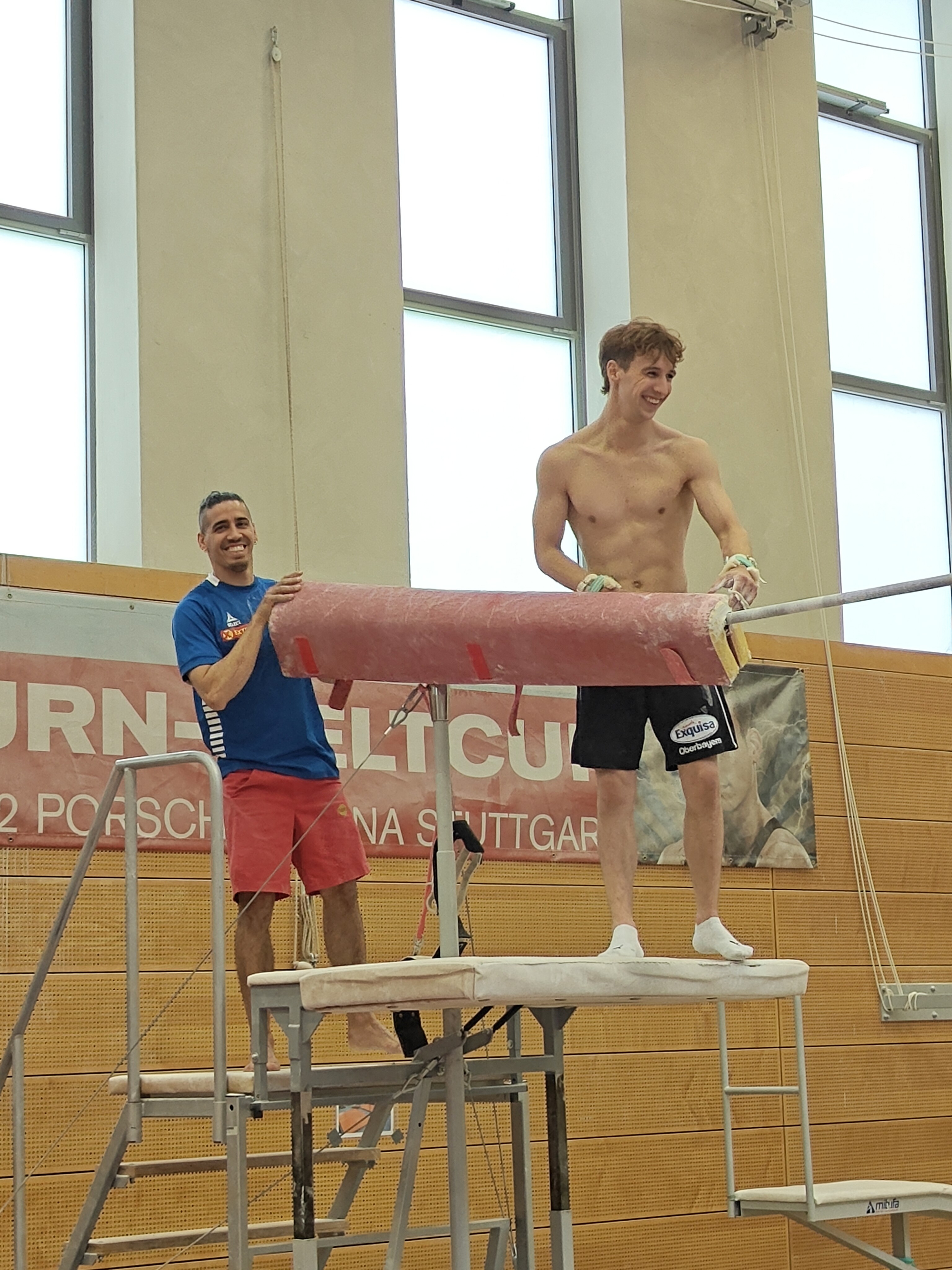
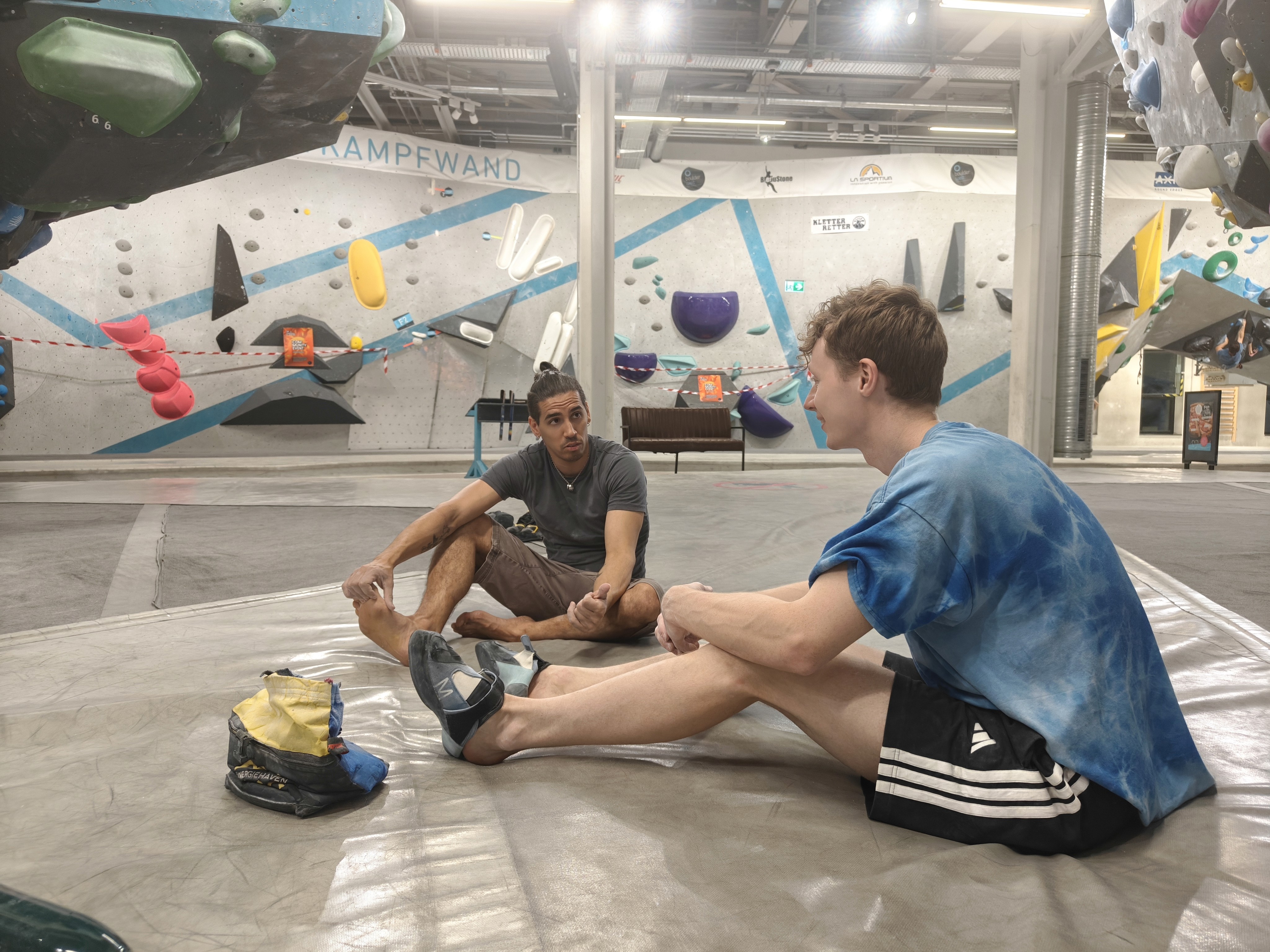
This is the second of three posts that came out of a presentation I was preparing for an institution in the sport. This one is about environment and mindset, the ground everything else is built on. If you missed Part 1 you can find it here.
Environment and mindset is a subject I could talk about for twenty hours and still not finish. Plenty of people have covered this better and in more open forums than gymnastics tends to allow, Simon Sinek especially, even though he's speaking about business. The translation into our sport isn't hard if you're willing to make it.
But building the right environment is my prerogative, and I have a phrase I keep coming back to: it doesn't matter how hard you try, you're not going to bloom a rose in the desert. Even if the rose forces itself to bloom, the environment won't let it hold.
This is the first thing I look at in every gym I walk into, because it's the groundwork everything else depends on. If you create a space where athletes believe they can reach their goals, they get a real chance at reaching them. For that, they need to believe in themselves, understand how to work, and be part of a team. I know some people will say gymnastics isn't a team sport. I'm sorry for their career, because in my gym, with my friends, we were a team. We were a pain in the ass too, sure, but if someone missed a session, someone else called them and told them to get to the gym. That kind of support matters.
We're working with small children who are still building their self-image out of what we tell them and how we make them feel. My gymnasts hear this from me constantly: your job is to believe you can fly, my job is to catch you when you can't.
That approach travels. Two weeks ago I visited a gym in the UK and the first thing I heard walking in the door was a kid shouting my name. It took me a second to place him, J., who I coached for six months when he was five years old. Kids build long term memory from around four or five, and he still remembered me, five years later, from ten hours a week for half a year.
Switzerland
My last job before that was the most challenging environment I had worked in. The culture that had been built around the group was one of compliance, and the boys had never been given much room to self regulate. There was no space for creativity, no free expression, just doing what they were told. I am the opposite of that as a coach, so when I took over eleven, then thirteen boys, they went feral. For three straight weeks I could not get any structure going, because I was not forcing anything on them.
I turned everything into a challenge instead. Ten swings to handstand and we go to the trampoline. Five of you hit a handstand today and we play for the rest of the hour. I learned that style of motivating people from a coach named B., and it worked, eventually, but the shift did not happen right away.
These boys had been complying out of fear, not choice. They'd never had to self-regulate, only follow. So the first couple of weeks were a mess, and I spent most of it sitting them down, without speaking German, using a translator on my phone, just trying to get them to understand: there are ten of you and one of me, I can't do everything, so help me, and tell me what you actually want to learn.
That's where the questionnaire habit started, and it's something I now run in every gym I walk into. I send the gymnasts a short list of questions on day one: favourite gymnast, favourite hobby, favourite apparatus, favourite food, do you have a pet. It sounds small. It matters more than it looks like it should.
I also drew one hard line. If you don't want to train and all you want to do is play, fine, as long as you're not bothering your teammates and you're not going to hurt yourself. Two boys crossed that line. They went home. Nobody else tested it again.
And I started sitting with them and just showing them gymnastics. Too many five and six year olds I've coached have never watched an Olympic routine in their life. They show up because their parents send them, without ever seeing what the sport actually is, what they might be chasing. This sport has almost no money in it. The people in it are in it for passion, and if nobody shows a kid what that passion looks like, you can't expect them to find it on their own.
Slowly, it shifted. One of the naughtiest kids in the group, the one who was always testing boundaries, became by the last two weeks the one going around telling the others to get to training when they were slacking off. Getting a nine year old to do that on his own, not because I told him to, told me I was on the right track.
I also teach my athletes to spot and correct each other. One of the boys was working a pike to tuck Salto on trampoline next to L. , who had it down clean in multiple shapes. The other boy messed it up, and before I could say a word, L. was already telling him what to fix. That was the moment I knew it had taken.
By the last few weeks, the boys were running their own conditioning. I'd write it on a piece of paper, announce the time, and they'd go check the page and do it without me saying another word.
I've managed to build that same thing in Switzerland, in the UK, everywhere I've coached long enough to try. So the real question is why more people aren't spending time on it. Because it pays for itself. It gets harder in the teenage years, you'll need to regulate more again, but the foundation lasts. Some of my closest friendships to this day came out of a gym like that.
Which brings me to something I think is missing more broadly, not just in gymnastics: we've stopped building communal spaces. If you're coaching ten or twenty kids for ten to twenty hours a week, that's a community whether you treat it like one or not. Caring about the people next to you, actively, changes how far they're willing to push themselves, and it changes it in the right direction. I've seen gyms where the coach wants the kids fighting each other to prove who's better. You can have rivalry without hostility. "Ooh, you did three? I'm doing four" is a completely different energy from "you did three, I should've done four." One builds people up while they compete. The other tears them down while they compete. Both are technically rivalry. Only one is worth building a program around.
None of this is a system I'd tell another coach to copy exactly. It works because of my personality, my sense of humour, the specific way I relate to people. I'd encourage every coach to find their own version of it, not mine.
Part 1 > https://sacha.framer.website/dtrh/the-knowledge-is-there.-the-gyms-look-the-same.
Part 3 > https://sacha.framer.website/dtrh/why-doesn-t-gymnastics-look-like-art-anymore
This is the second of three posts that came out of a presentation I was preparing for an institution in the sport. This one is about environment and mindset, the ground everything else is built on. If you missed Part 1 you can find it here.
Environment and mindset is a subject I could talk about for twenty hours and still not finish. Plenty of people have covered this better and in more open forums than gymnastics tends to allow, Simon Sinek especially, even though he's speaking about business. The translation into our sport isn't hard if you're willing to make it.
But building the right environment is my prerogative, and I have a phrase I keep coming back to: it doesn't matter how hard you try, you're not going to bloom a rose in the desert. Even if the rose forces itself to bloom, the environment won't let it hold.
This is the first thing I look at in every gym I walk into, because it's the groundwork everything else depends on. If you create a space where athletes believe they can reach their goals, they get a real chance at reaching them. For that, they need to believe in themselves, understand how to work, and be part of a team. I know some people will say gymnastics isn't a team sport. I'm sorry for their career, because in my gym, with my friends, we were a team. We were a pain in the ass too, sure, but if someone missed a session, someone else called them and told them to get to the gym. That kind of support matters.
We're working with small children who are still building their self-image out of what we tell them and how we make them feel. My gymnasts hear this from me constantly: your job is to believe you can fly, my job is to catch you when you can't.
That approach travels. Two weeks ago I visited a gym in the UK and the first thing I heard walking in the door was a kid shouting my name. It took me a second to place him, J., who I coached for six months when he was five years old. Kids build long term memory from around four or five, and he still remembered me, five years later, from ten hours a week for half a year.
Switzerland
My last job before that was the most challenging environment I had worked in. The culture that had been built around the group was one of compliance, and the boys had never been given much room to self regulate. There was no space for creativity, no free expression, just doing what they were told. I am the opposite of that as a coach, so when I took over eleven, then thirteen boys, they went feral. For three straight weeks I could not get any structure going, because I was not forcing anything on them.
I turned everything into a challenge instead. Ten swings to handstand and we go to the trampoline. Five of you hit a handstand today and we play for the rest of the hour. I learned that style of motivating people from a coach named B., and it worked, eventually, but the shift did not happen right away.
These boys had been complying out of fear, not choice. They'd never had to self-regulate, only follow. So the first couple of weeks were a mess, and I spent most of it sitting them down, without speaking German, using a translator on my phone, just trying to get them to understand: there are ten of you and one of me, I can't do everything, so help me, and tell me what you actually want to learn.
That's where the questionnaire habit started, and it's something I now run in every gym I walk into. I send the gymnasts a short list of questions on day one: favourite gymnast, favourite hobby, favourite apparatus, favourite food, do you have a pet. It sounds small. It matters more than it looks like it should.
I also drew one hard line. If you don't want to train and all you want to do is play, fine, as long as you're not bothering your teammates and you're not going to hurt yourself. Two boys crossed that line. They went home. Nobody else tested it again.
And I started sitting with them and just showing them gymnastics. Too many five and six year olds I've coached have never watched an Olympic routine in their life. They show up because their parents send them, without ever seeing what the sport actually is, what they might be chasing. This sport has almost no money in it. The people in it are in it for passion, and if nobody shows a kid what that passion looks like, you can't expect them to find it on their own.
Slowly, it shifted. One of the naughtiest kids in the group, the one who was always testing boundaries, became by the last two weeks the one going around telling the others to get to training when they were slacking off. Getting a nine year old to do that on his own, not because I told him to, told me I was on the right track.
I also teach my athletes to spot and correct each other. One of the boys was working a pike to tuck Salto on trampoline next to L. , who had it down clean in multiple shapes. The other boy messed it up, and before I could say a word, L. was already telling him what to fix. That was the moment I knew it had taken.
By the last few weeks, the boys were running their own conditioning. I'd write it on a piece of paper, announce the time, and they'd go check the page and do it without me saying another word.
I've managed to build that same thing in Switzerland, in the UK, everywhere I've coached long enough to try. So the real question is why more people aren't spending time on it. Because it pays for itself. It gets harder in the teenage years, you'll need to regulate more again, but the foundation lasts. Some of my closest friendships to this day came out of a gym like that.
Which brings me to something I think is missing more broadly, not just in gymnastics: we've stopped building communal spaces. If you're coaching ten or twenty kids for ten to twenty hours a week, that's a community whether you treat it like one or not. Caring about the people next to you, actively, changes how far they're willing to push themselves, and it changes it in the right direction. I've seen gyms where the coach wants the kids fighting each other to prove who's better. You can have rivalry without hostility. "Ooh, you did three? I'm doing four" is a completely different energy from "you did three, I should've done four." One builds people up while they compete. The other tears them down while they compete. Both are technically rivalry. Only one is worth building a program around.
None of this is a system I'd tell another coach to copy exactly. It works because of my personality, my sense of humour, the specific way I relate to people. I'd encourage every coach to find their own version of it, not mine.
Part 1 > https://sacha.framer.website/dtrh/the-knowledge-is-there.-the-gyms-look-the-same.
Part 3 > https://sacha.framer.website/dtrh/why-doesn-t-gymnastics-look-like-art-anymore
Sacha's Newsletter
Sacha's Newsletter
Sign up here for received new articles!
Sign up here for received new articles!