Why Doesn't Gymnastics Look Like Art Anymore
Why Doesn't Gymnastics Look Like Art Anymore
Why Doesn't Gymnastics Look Like Art Anymore
This is the third and last of three posts that came out of a presentation I was preparing for an institution in the sport. This one is about humanity and artistry, and why I think gymnastics has been losing both for longer than most people want to admit. If you want to start from the beginning, Part 1 and Part 2 are at the bottom.
I do not expect many people to agree with everything in this one. That is fine.
A friend of mine coaches in Argentina, and we have had this conversation more times than I can count: gymnastics is not fun to watch anymore. My favourite gymnast of all time is Vitaly Scherbo, and there are routines from that era, from Italy's programs too, that still stop me. That is not happening now, not the way it used to. My friend feels the same about his favourite, Alexei Nemov. There is less expression across the board, and it is worse in women's gymnastics than men's.
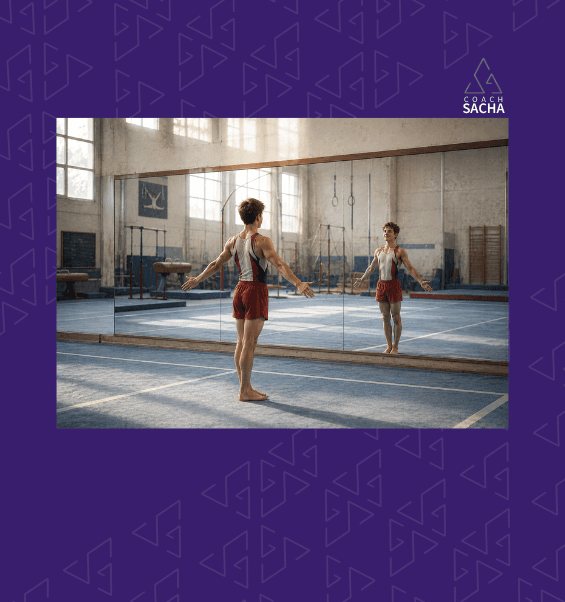
Here is a detail that says more than any of my opinions could: in most gyms I walk into, I end up spending a few minutes a week in front of a mirror teaching girls how to smile through a routine. Having to teach a smile means the smile is not coming from enjoying what they are doing. That should scare more people than it does.
Worth saying clearly: I have inherited every one of these athletes partway through their development. None of them started with me, so I cannot tell you with certainty what happened before I got there. Maybe pressure at home, maybe something else entirely. That part is not mine to diagnose.
What actually counts as art
My rough definition: art is using your creative imagination to make something that moves people, whether that is emotional, intellectual, technical, or just beautiful to look at. Old gymnastics used to chase something close to a Greek ideal, the same instinct that made bodybuilding, in its own way, a form of art. I can look at a painting and never know what the painter intended. That is not a flaw. Interpreting it is my job as the viewer. Gymnastics used to give people that same room.
When I hand a senior girl who already knows how to move a floor routine, I let her choreograph her own dance elements. Sometimes it is not what I would have picked. I had a real disagreement with one athlete about a look I did not think fit her. She kept working at it for a few weeks and made it work anyway, better than what I would have given her.
And then there is Céline van Gerner, a Dutch gymnast who came to a World Cup in 2018 with a cat themed routine. Full face paint, the whole concept built around it. That is art by any definition. The FIG's response was to ban theatrical makeup from competitions entirely. That tells you everything about where gymnastics stands on this right now.
Part of finding that room is just getting out of the way and letting an athlete explore how they want something to look. I do not have a clean answer for whether the sport should keep a separate artistry score at all or fold everything into pure execution. Either path has a cost. I do not know which is right.
Wabi-Sabi
I am planning to go learn in Japan, because I think their gymnasts have found the clearest route to something close to a flow state, and their sense of line, the actual shape a body makes in space, is sharper than almost anywhere else I have coached. A jagged angle and a clean elliptical curve both exist as options. One reads better to the eye. Teaching an athlete to find that shape is real coaching. Sometimes an athlete only wants the jagged version, and that is their call to make once they understand the cost: this position costs you 0.3 here, here, and there, still want it? If yes, that is his career, and I respect it.
There is a line I heard about nine years ago that stuck with me, usually credited to George Washington Carver, and later carried into a well known commencement speech by Rick Rigsby: do the common things in an uncommon way, and you will command the attention of the world. That is what I think is missing from interpretation in this sport right now. The code gives you the rules. It does not require everyone to fill them the same way, and right now, almost everyone does. Maybe the honest fix is equalising scores enough that athletes have real room to choose different skill combinations instead of chasing the same handful of safe ones.
I tell my athletes I do not care about the ranking. I care about training them to be good enough that nobody in the building can look away. Kohei Uchimura had that. It is teachable. It is also a genuine pain to build, and it takes longer than most people want to give it.
Ego, one more time
I have said this in conversations with people in this sport before: ego plays a bigger part in this than most coaches would admit. In Switzerland, my head coach and I saw the same handstand and wanted two different things from it, not because either of us was wrong, but because we were solving for different timelines. He was building for the next competition. I was building for the next five or six years. Both handstands were fine. Lowering the ego enough to hold two correct answers at once, his and mine, is the harder skill, and it is one I think most coaches could use more of.
Not everyone has to agree with me on any of this. Some people do not like chocolate and ice cream either, and I still have to respect that is allowed, even if that blows my mind. I do not have a tidy solution for artistry. I have a lot of thoughts, and I am still working out what to do with them.
Part 1 > https://sacha.framer.website/dtrh/the-knowledge-is-there.-the-gyms-look-the-same.
Part 2 >https://sacha.framer.website/dtrh/you-can-t-bloom-a-rose-in-the-desert
This is the third and last of three posts that came out of a presentation I was preparing for an institution in the sport. This one is about humanity and artistry, and why I think gymnastics has been losing both for longer than most people want to admit. If you want to start from the beginning, Part 1 and Part 2 are at the bottom.
I do not expect many people to agree with everything in this one. That is fine.
A friend of mine coaches in Argentina, and we have had this conversation more times than I can count: gymnastics is not fun to watch anymore. My favourite gymnast of all time is Vitaly Scherbo, and there are routines from that era, from Italy's programs too, that still stop me. That is not happening now, not the way it used to. My friend feels the same about his favourite, Alexei Nemov. There is less expression across the board, and it is worse in women's gymnastics than men's.
Here is a detail that says more than any of my opinions could: in most gyms I walk into, I end up spending a few minutes a week in front of a mirror teaching girls how to smile through a routine. Having to teach a smile means the smile is not coming from enjoying what they are doing. That should scare more people than it does.
Worth saying clearly: I have inherited every one of these athletes partway through their development. None of them started with me, so I cannot tell you with certainty what happened before I got there. Maybe pressure at home, maybe something else entirely. That part is not mine to diagnose.
What actually counts as art
My rough definition: art is using your creative imagination to make something that moves people, whether that is emotional, intellectual, technical, or just beautiful to look at. Old gymnastics used to chase something close to a Greek ideal, the same instinct that made bodybuilding, in its own way, a form of art. I can look at a painting and never know what the painter intended. That is not a flaw. Interpreting it is my job as the viewer. Gymnastics used to give people that same room.
When I hand a senior girl who already knows how to move a floor routine, I let her choreograph her own dance elements. Sometimes it is not what I would have picked. I had a real disagreement with one athlete about a look I did not think fit her. She kept working at it for a few weeks and made it work anyway, better than what I would have given her.
And then there is Céline van Gerner, a Dutch gymnast who came to a World Cup in 2018 with a cat themed routine. Full face paint, the whole concept built around it. That is art by any definition. The FIG's response was to ban theatrical makeup from competitions entirely. That tells you everything about where gymnastics stands on this right now.
Part of finding that room is just getting out of the way and letting an athlete explore how they want something to look. I do not have a clean answer for whether the sport should keep a separate artistry score at all or fold everything into pure execution. Either path has a cost. I do not know which is right.
Wabi-Sabi
I am planning to go learn in Japan, because I think their gymnasts have found the clearest route to something close to a flow state, and their sense of line, the actual shape a body makes in space, is sharper than almost anywhere else I have coached. A jagged angle and a clean elliptical curve both exist as options. One reads better to the eye. Teaching an athlete to find that shape is real coaching. Sometimes an athlete only wants the jagged version, and that is their call to make once they understand the cost: this position costs you 0.3 here, here, and there, still want it? If yes, that is his career, and I respect it.
There is a line I heard about nine years ago that stuck with me, usually credited to George Washington Carver, and later carried into a well known commencement speech by Rick Rigsby: do the common things in an uncommon way, and you will command the attention of the world. That is what I think is missing from interpretation in this sport right now. The code gives you the rules. It does not require everyone to fill them the same way, and right now, almost everyone does. Maybe the honest fix is equalising scores enough that athletes have real room to choose different skill combinations instead of chasing the same handful of safe ones.
I tell my athletes I do not care about the ranking. I care about training them to be good enough that nobody in the building can look away. Kohei Uchimura had that. It is teachable. It is also a genuine pain to build, and it takes longer than most people want to give it.
Ego, one more time
I have said this in conversations with people in this sport before: ego plays a bigger part in this than most coaches would admit. In Switzerland, my head coach and I saw the same handstand and wanted two different things from it, not because either of us was wrong, but because we were solving for different timelines. He was building for the next competition. I was building for the next five or six years. Both handstands were fine. Lowering the ego enough to hold two correct answers at once, his and mine, is the harder skill, and it is one I think most coaches could use more of.
Not everyone has to agree with me on any of this. Some people do not like chocolate and ice cream either, and I still have to respect that is allowed, even if that blows my mind. I do not have a tidy solution for artistry. I have a lot of thoughts, and I am still working out what to do with them.
Part 1 > https://sacha.framer.website/dtrh/the-knowledge-is-there.-the-gyms-look-the-same.
Part 2 >https://sacha.framer.website/dtrh/you-can-t-bloom-a-rose-in-the-desert
Sacha's Newsletter
Sacha's Newsletter
Sign up here for received new articles!
Sign up here for received new articles!